Aug 05, 2026
PILOT FINDINGS REPORT
Immersive Fire Safety Education
What a three-session middle-school pilot revealed about engagement, repeated practice, applied decision-making, and immersive learning.

NucleusXR collaborated with Dr. Tamar Atmajian and educators at a public middle school within the Los Angeles Unified School District to explore how immersive simulation could turn a familiar safety lesson into hands-on, repeatable practice.
Across three after-school sessions, students responded to a simulated kitchen grease fire, tested different decisions, experienced the consequences of their actions, received immediate coaching, and returned to try again.
The Pilot at a Glance
19
Students and educators participated
Every participant found the experience enjoyable and agreed that it helped them practice what to do.
152
Completed student attempts
10.1
Aggregate attempts per student
4 of 4
Educators would recommend the experience
Overview
From a Safety Rule to a Lived Decision
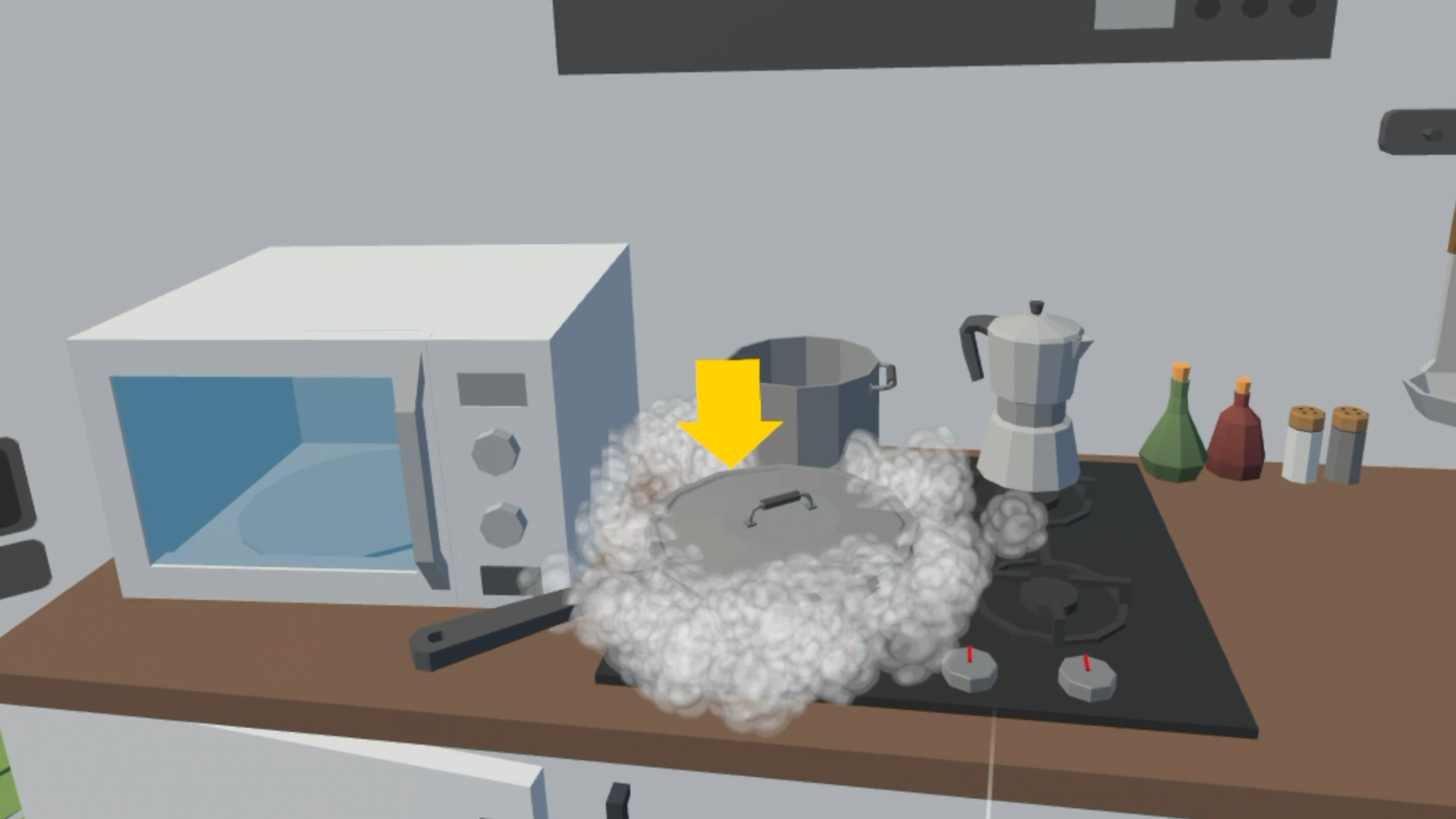
A grease fire can be explained in a few sentences: keep the pan in place, cover it with a lid, turn off the heat, and never use water. The challenge is helping a learner recognize the situation, choose the right response, and understand why the wrong choice can become dangerous so quickly.
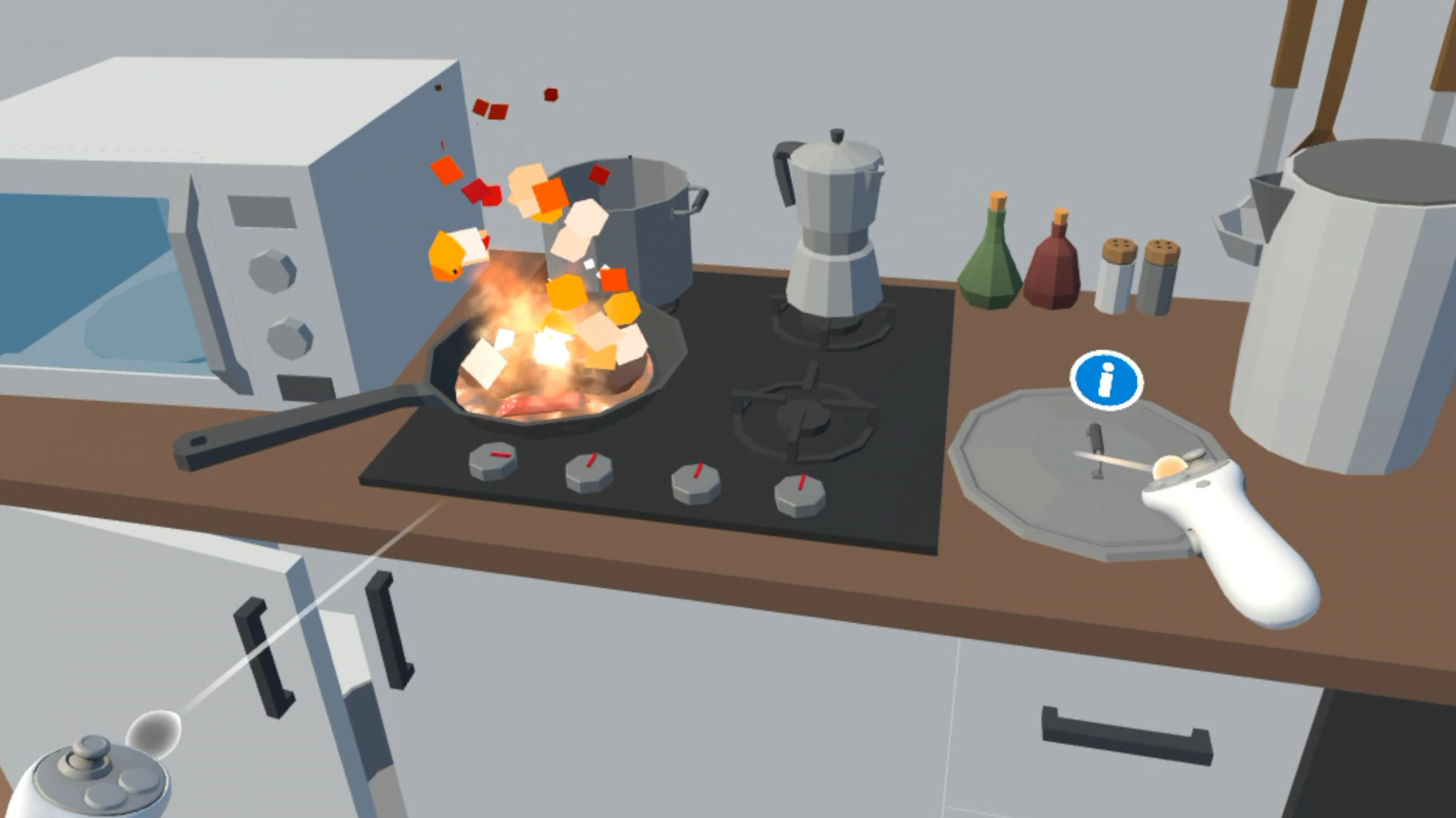
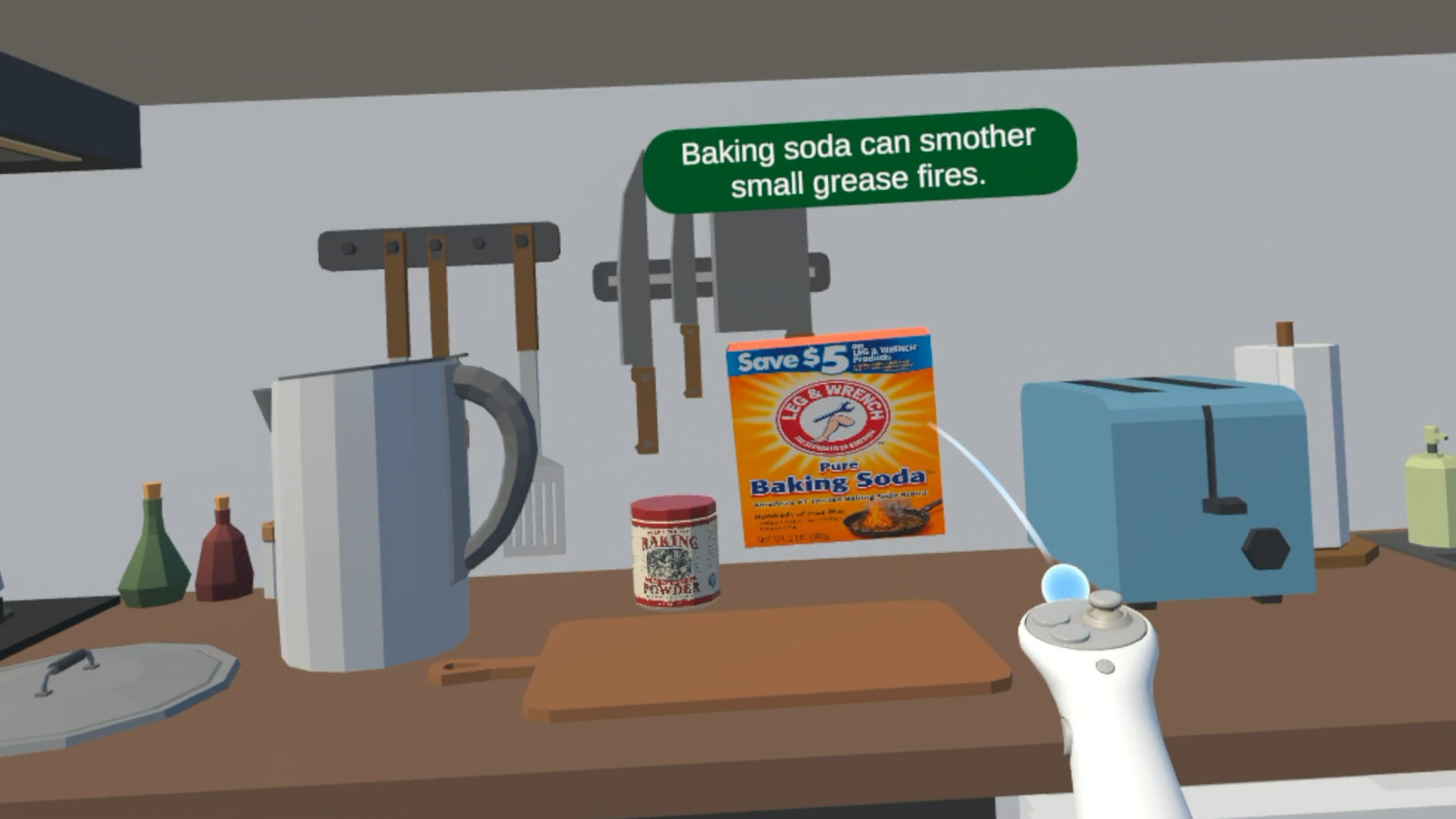
The NucleusXR fire-safety module placed students inside an approachable, stylized home environment where those decisions carried visible consequences. Learners could inspect tools, respond to the fire, receive contextual guidance, and see how the scenario changed based on their actions.
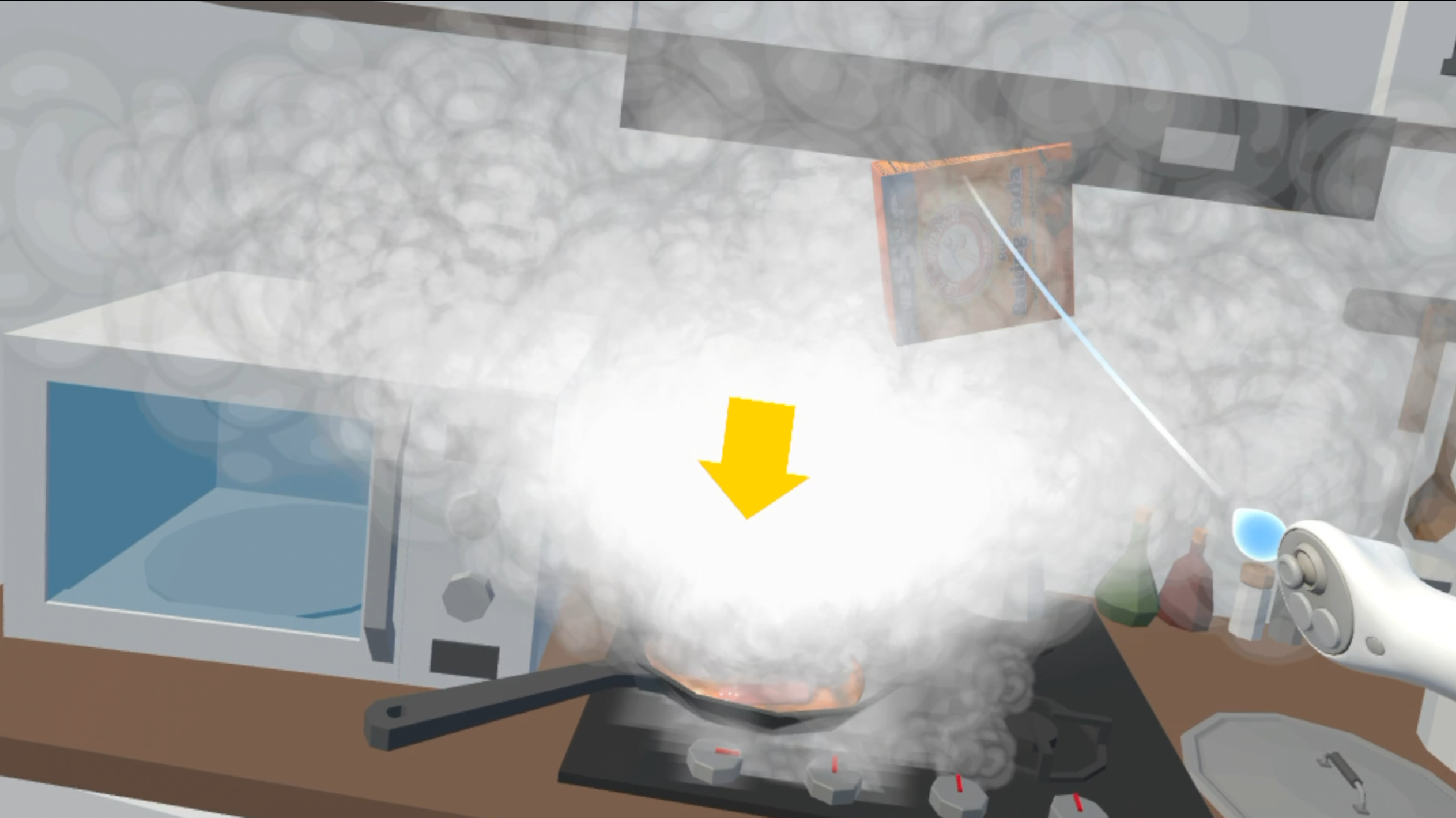
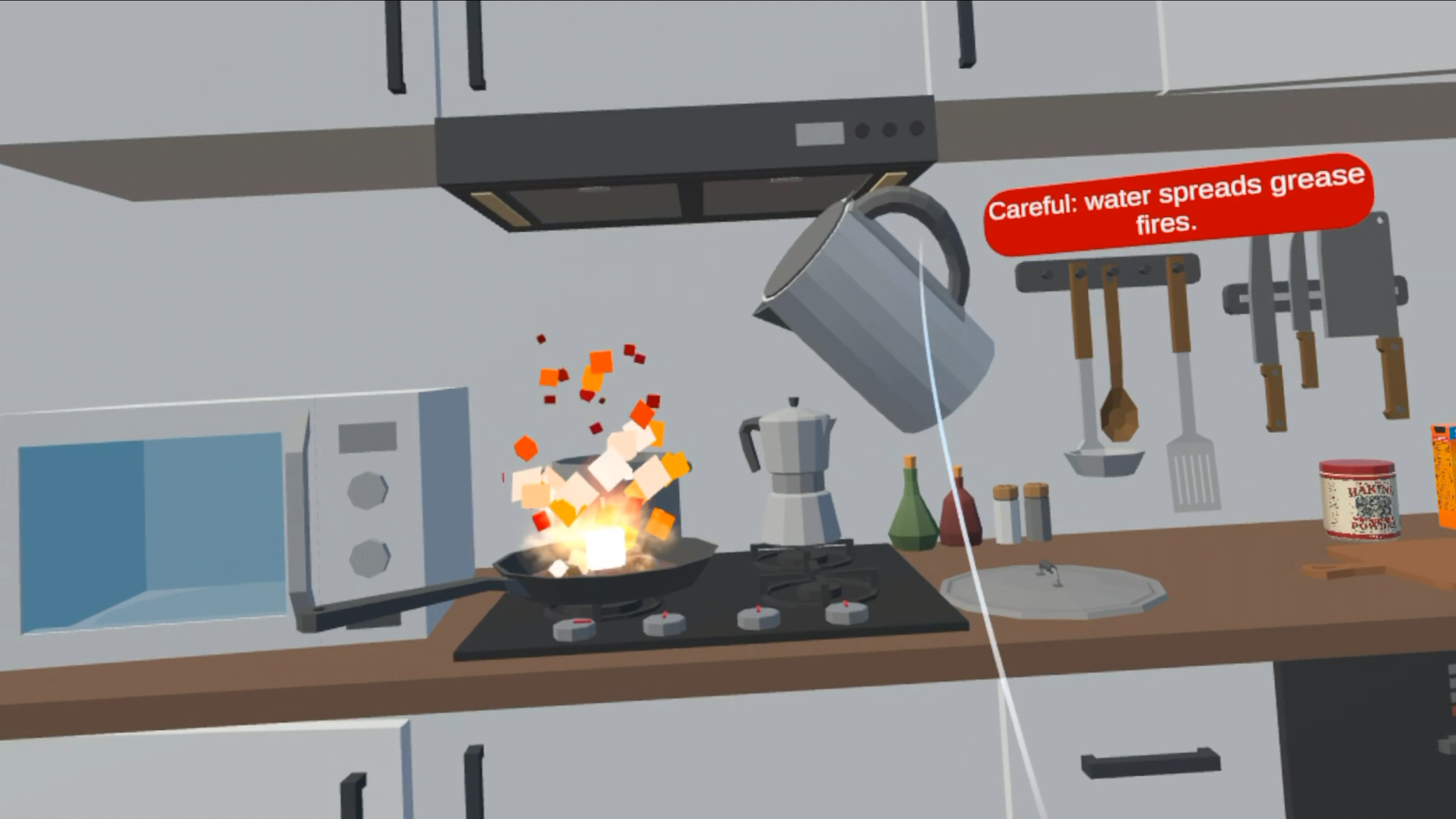
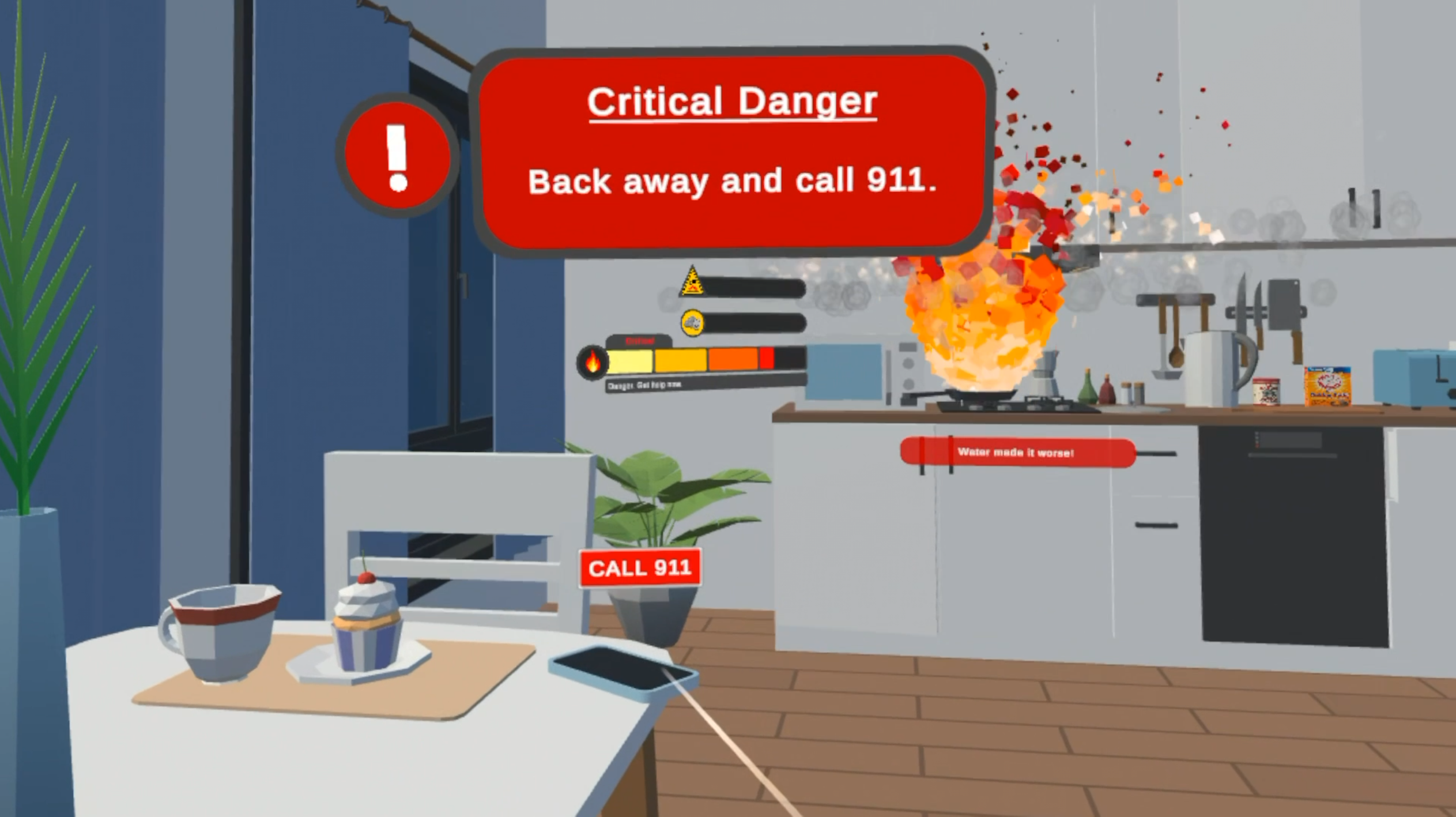
Using the lid and turning off the heat produced the preferred response. Baking soda could help while the fire remained small. Baking powder was ineffective. Pouring water onto the grease fire caused an immediate flare-up and forced the scenario into an emergency response.


Learner actions changed the state of the scenario, turning fire-safety guidance into visible cause and effect.
What Happened When Students Entered the Experience
Engagement Became Replay
Every participant agreed or strongly agreed that the experience kept their attention, felt more engaging than watching a video, and made them want to retry the module.
The platform recorded 152 completed attempts from 15 students, an aggregate average of 10.1 attempts per student. Students replayed to improve scores, test alternate decisions, compare outcomes, and see how the simulated fire would respond.
Consequences Made the Lesson Tangible
When students selected water, the fire surged and spread into the cabinets. The hazard state escalated, the guidance changed, and the emergency phone became the correct path.
Rather than watching someone else make the wrong choice, learners owned the decision, saw the system react, received coaching, and had another opportunity to apply what they had learned.
19 of 19 participants agreed or strongly agreed that the module helped them practice what to do.
Students remained visibly focused and active as they explored the fire-safety scenario from both seated and standing positions.
Students shared the same networked virtual environment, saw and spoke with one another, exchanged advice, and compared results. Their actual fire scenarios remained individual.
Each learner controlled their own tools, made their own decisions, received their own feedback, and earned their own result. This preserved the social energy of a classroom without allowing one confident student to complete the activity for everyone else.
Social Learning and Individual Responsibility Worked Together

15 of 15 students strongly agreed that the experience was more engaging than watching a video and taking a quiz.
“Schools need sustainable tools and not just things that are new.”
Educators Saw a Larger Opportunity
The educators quickly began imagining applications beyond fire safety, including science, engineering, mathematics, history, English, interactive storytelling, and social-emotional learning.
All four educators said they would recommend this type of immersive experience to another educator, facilitator, or organization. They also positively rated participant understanding, topic understanding, decision-making practice, and the polish and reliability of the experience.
For Dr. Atmajian, immersive technology was not a replacement for instruction. Its value was in extending instruction through experiences that remained engaging, hands-on, and aligned with educational goals.
In an interview with the NucleusXR team, Dr. Atmajian reflects on the pilot, curriculum alignment, safe experimentation, and the role immersive technology can play in extending traditional instruction.
Dr. Tamar Atmajian
Educator & Middle School Coordinator
More Than an Immersive Demonstration


The fire module was the experience students saw. NucleusXR supplied the learning system around it.
The platform combined:
-
A responsive, branching simulation
-
Contextual guidance and safety feedback
-
Individual scores, grades, and coaching
-
Immediate replay
-
Shared multiplayer presence
-
Facilitator tools
-
Attempt-level reporting and analytics
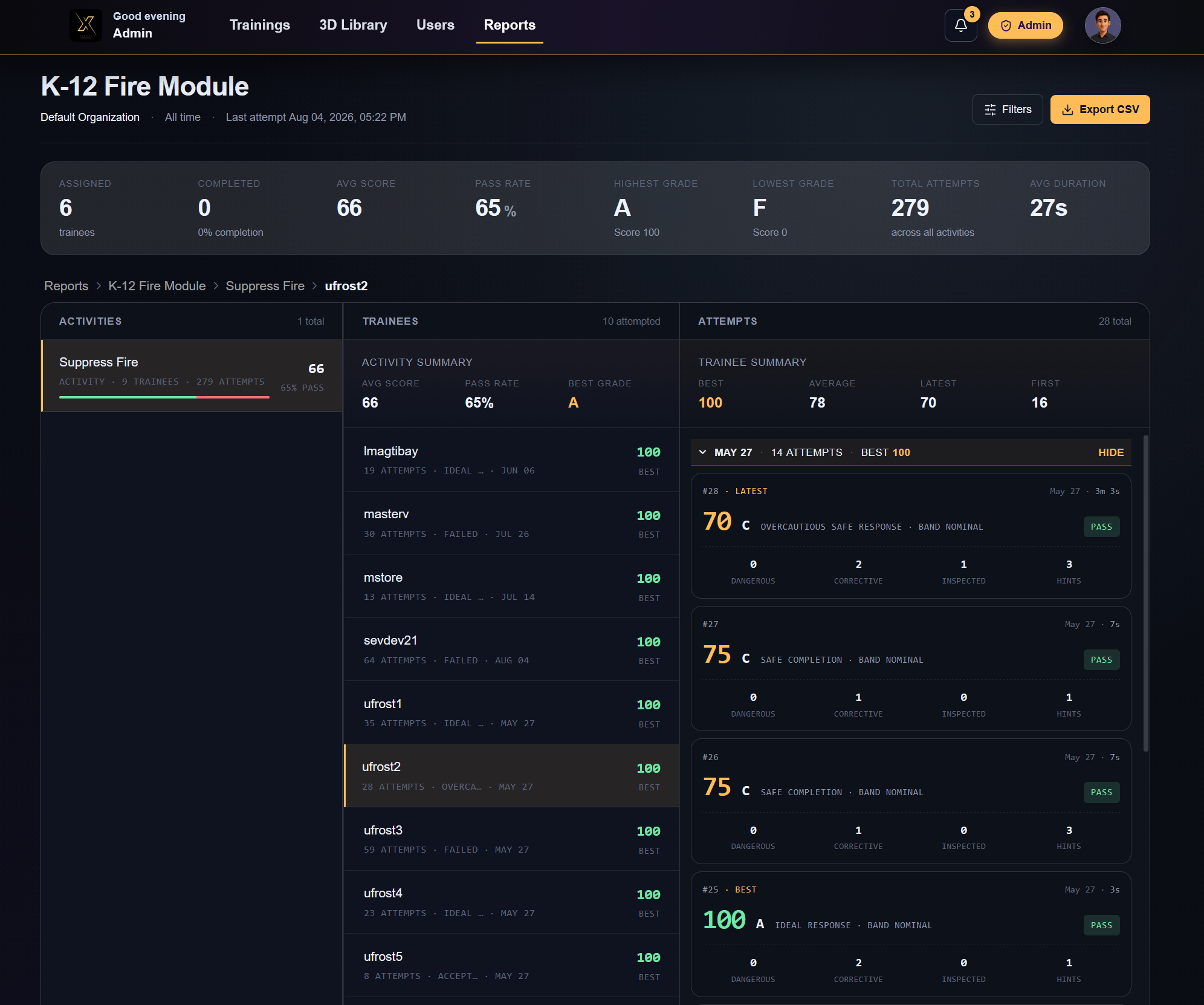
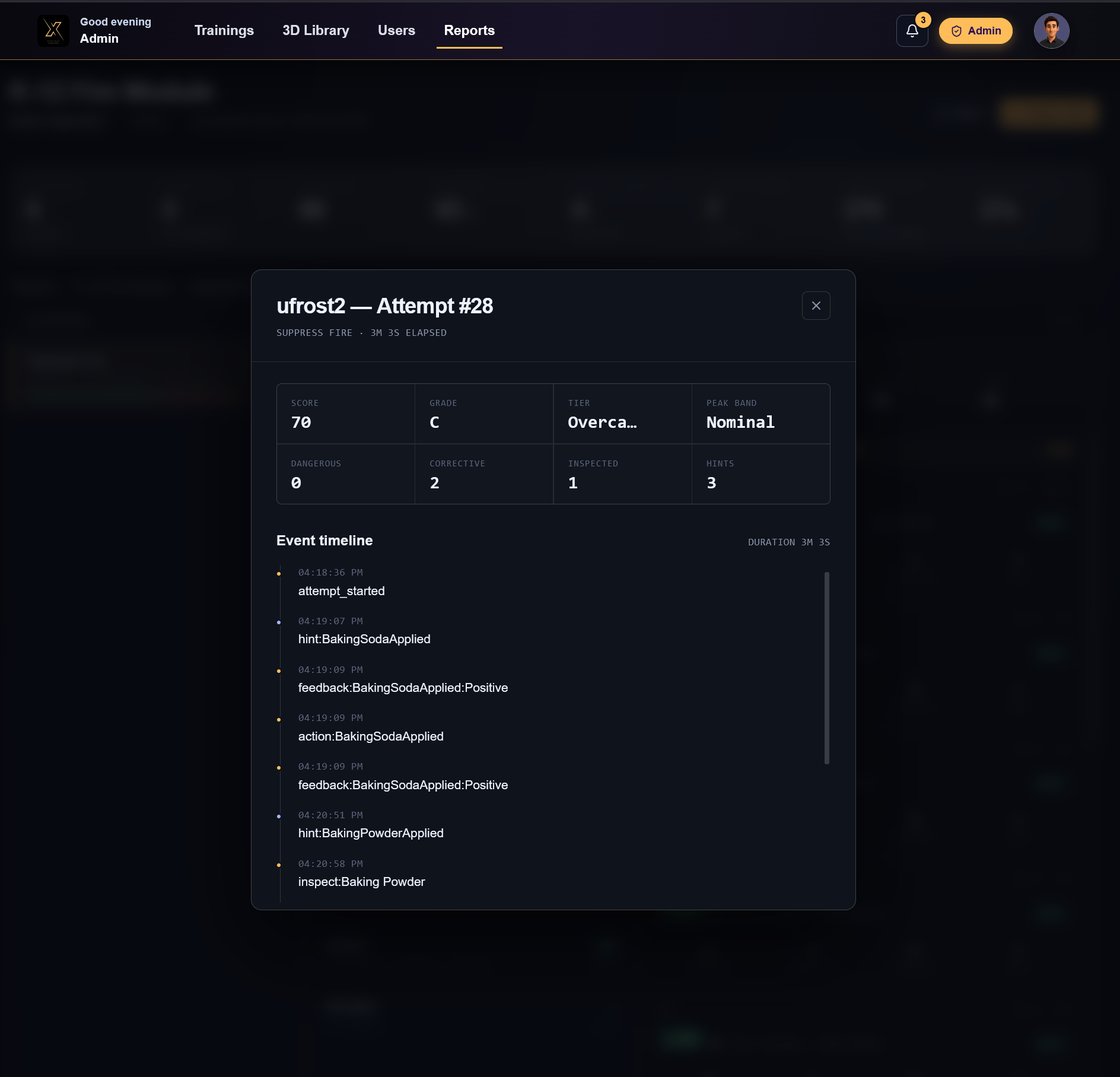
The NucleusXR portal gave the team a high-level view of participation and performance while allowing individual attempts to be reviewed in greater detail, including outcomes, corrective actions, hints, inspected objects, and event timelines.
The headset delivered the immersion. NucleusXR turned that immersion into a learning system.